
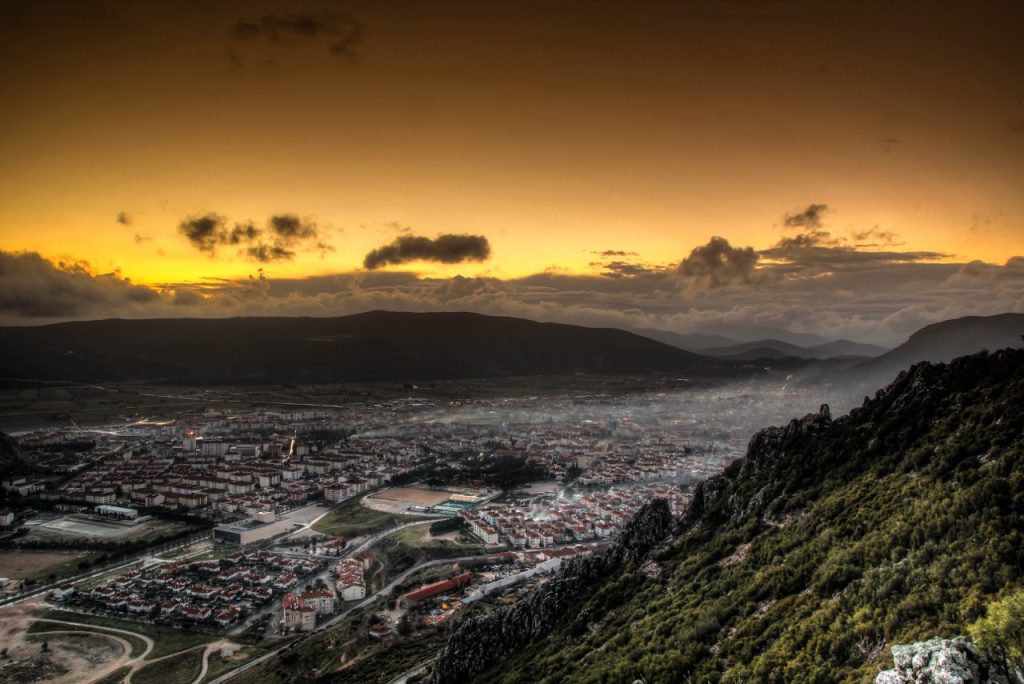
Places to Discover in Muğla Menteşe and Surrounding Districts
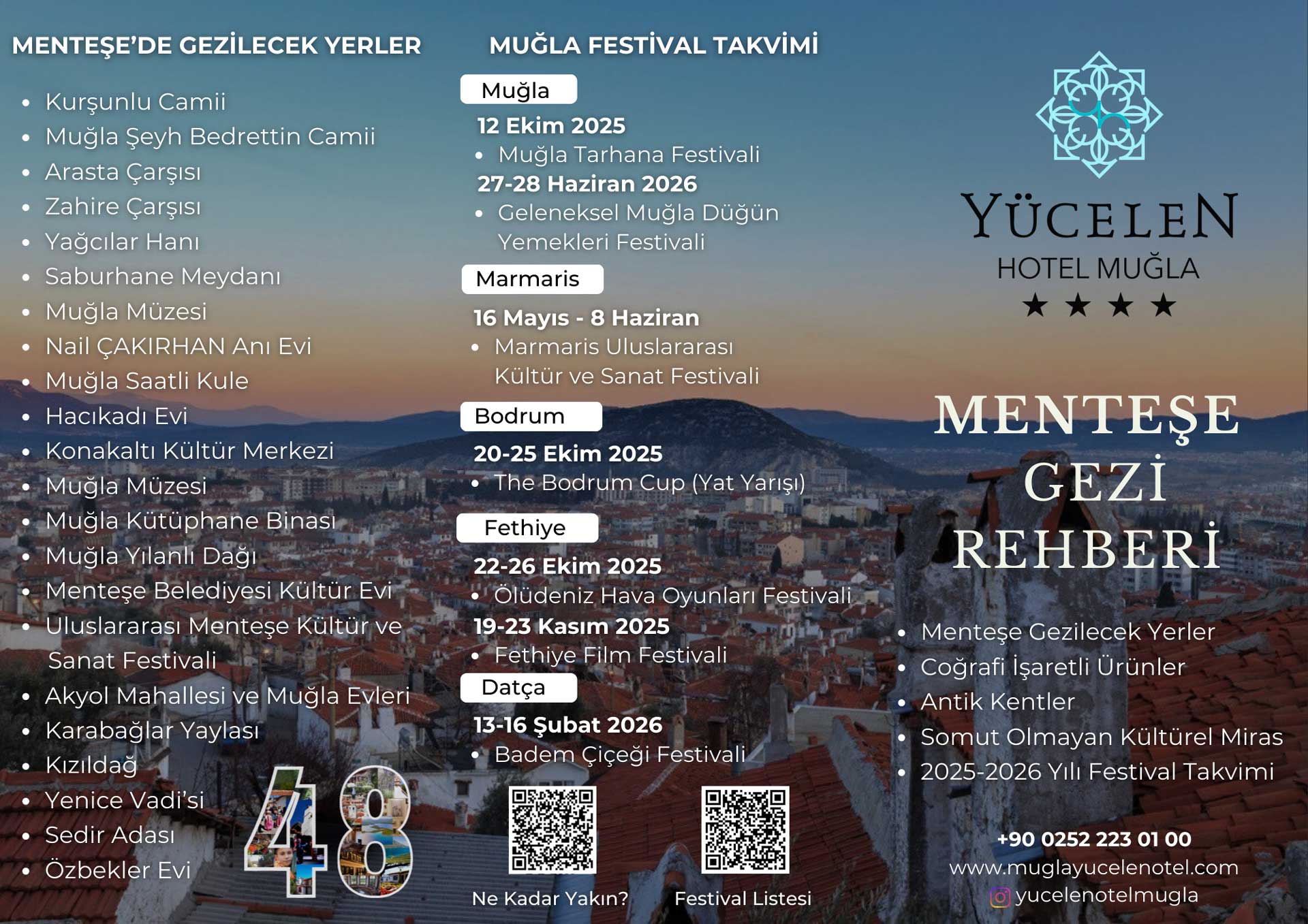
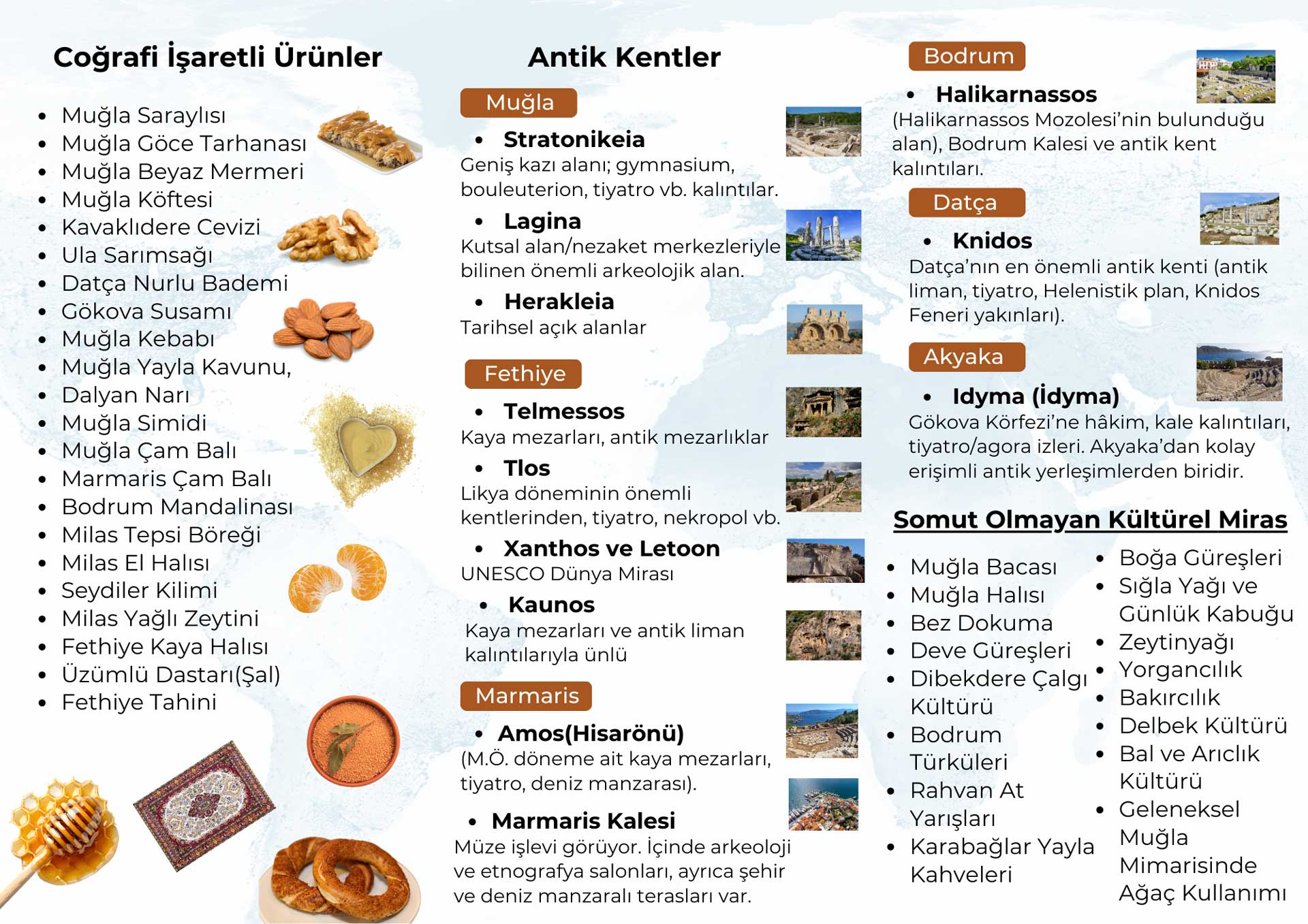
Muğla is a city that attracts attention not only with its turquoise sea and natural beauties, but also with its deep-rooted history and rich cultural heritage of thousands of years. Based on the image in your hand, I have turned the ancient cities and intangible cultural heritage elements that reflect the history and culture of this unique geography into a detailed blog post.
Ancient Cities of Muğla: A Journey in the Footsteps of History
Muğla and its surroundings are full of fascinating ancient cities that hosted the Carian and Lycian civilizations in ancient times, each telling a different story.
Muğla – Stratonikeia, Lagina ve Herakleia
- Stratonikeia: Located in the Yatağan district, this ancient city is also known as the "City of Gladiators". It is one of the rare settlements where structures from the Hellenistic, Roman, Byzantine, Principalities, Ottoman and Republican periods can be seen together. This city, which has hosted different civilizations for centuries, sheds light on history with its stone-paved streets, monumental gates, and well-preserved structures. Especially the city's parliament building (Bouleuterion) and the buildings used as a resting place for gladiators are important ruins that impress visitors.
- Lagina: Lagina, a sanctuary affiliated with Stratonikeia, was an important religious center during the Hellenistic and Roman periods. Famous for the Sanctuary of Hecate, it was a vibrant hub for festivals and rituals held in ancient times. Lagina, which hosts the most beautiful examples of sculpture and architecture, is an ideal stop for those who want to feel the mystical atmosphere of history.
- Herakleia: Located around Bafa Lake, this ancient city stands out especially with its lakeside location and natural beauty. The city has a legend believed to have been founded by Herakleia, a princess from Miletus. The city, which was built with the characteristic architecture of the Hellenistic period, can still be seen in the ruins of the agora, theater and temple.
Bodrum – Halicarnassus and Bodrum Castle
- Halicarnassus: Rising above modern Bodrum, this ancient city was home to the Mausoleum (Tomb of Mausolus), the birthplace of Herodotus, known as the father of history, and one of the Seven Wonders of the Ancient World. The city's walls, Myndos Gate, and ancient theater bear the traces of this glorious past.
- Bodrum Castle: Built by the Knights of Saint Jean in the 15th century, the castle has a strategic location between two ports. Inside are sections named after different nations, such as French, British, German and Italian towers. The castle, which is now used as the Bodrum Underwater Archaeology Museum, hosts one of the world's most important sunken ship collections, bringing together history and seafaring.
Datça – Knidos
- Knidos: Located at the very tip of the Datça Peninsula, at the junction of the Aegean and the Mediterranean, Knidos was one of the richest and most famous cities of the Ancient Age. Known for its power in maritime trade, the city had two ports: one military and the other commercial. The city, which hosted the famous Aphrodite statue of Praxiteles, one of the most famous sculptors of its time, was also the center of science and art. With its sundial, theaters and sanctuaries, Knidos is a must-see historical wealth with a unique view.
Fethiye – Telmessos, Tlos, Xanthos, Letoon ve Kaunos
- Telmessos: Telmessos, the old name of Fethiye, was an important port city of the Lycian period. The most striking feature of the city is the monumental rock tombs carved into the steep cliffs. Amintas Rock Tomb is one of the symbols of Fethiye as one of the most magnificent examples of Hellenistic architecture.
- Tlos: Tlos, which has a history of about 4000 years, was one of the oldest and largest settlements in Lycia. The ruins of rock tombs, Roman theater, agora, stadium, and bath reveal the city's magnificence.
- Xanthos & Letoon: These two ancient cities, which are on the UNESCO World Heritage List, were the administrative and religious centers of the Lycian civilization. While Xanthos was known as the capital of the period, Letoon was the religious center of Lycia with its temples dedicated to the goddesses Leto, Apollo and Artemis. The intertwined historical and artistic richness of the cities is a unique area of discovery for archaeology enthusiasts.
- Kaunos: Located near Dalyan, Kaunos has an impressive view with its location overlooking the Dalyan Canal. Its most distinctive feature is the rock tombs by the river. Kaunos, a historically important port city, attracts attention with its ruins such as a theater, agora, stoa and bath.
Akyaka – İdyma
- Idyma: Located near Akyaka, this ancient city was built on a hill overlooking the magnificent view of the Gulf of Gökova. Idyma, which stands out especially with its rock tombs and acropolis ruins, was an important member of the Carian League and had a strategic importance as one of the intersection points of trade routes in ancient times.
Marmaris – Amos
- Amos: Located near the Turunç bay of Marmaris, Amos was built on a steep hill. The city, which belongs to the Peraia of Rhodes, attracts attention with its well-preserved ancient theater, temple ruins and walls. The theater is located against the unique sea view and bears traces of the Hellenistic period.
Intangible Cultural Heritage of Muğla
Muğla's cultural richness is not limited to stone buildings. Many elements, from local handicrafts to traditional entertainments and a rich oral culture, are the values that make Muğla unique.
Crafts & Products
- Muğla Chimney: Chimneys, a characteristic element of traditional Muğla houses, are not only an architectural element but also a part of the city's cultural identity.
- Muğla Carpet and Cloth Weaving: Carpets woven in Milas and its surroundings have a deep-rooted history. These carpets, known by names such as "Ada Milas" and "Cıngıllı Cafer\
- Sweetgum Oil and Frankincense Peel: Sweetgum oil, obtained from the Anatolian sweetgum tree, which is the endemic tree of Köyceğiz and Fethiye, is a product that is believed to have been used as a "love potion" by Cleopatra in history, and has both healing and commercial value. The process of obtaining this oil is one of the most arduous traditions of the region.
- Olive Oil and Quilting: Muğla is a region known for its olive oil production. Traditional olive oil production methods and the place of this product in the local cuisine are kept alive as a cultural heritage. Quilting is one of the crafts that was once very popular, but is now declining in number.
- Coppersmithing: Coppersmithing, which has a history of more than 800 years in Kavaklıdere district, is one of the oldest handicrafts of the region. The masters who perform this craft continue to produce kitchen utensils and ornaments by shaping copper.
- Honey and Beekeeping Culture: Muğla, one of Turkey's most important honey production centers, is especially famous for its pine honey. Wandering beekeeping and local hive types are an important part of this culture. Muğla Beekeeping Museum was established to pass on this rich heritage to future generations.
- Traditional Muğla Architecture: Muğla's unique houses exhibit the harmony of stone and woodwork. The tree decorations and construction techniques used in this architecture reflect the aesthetic understanding of the region.
Traditional Events and Music
- Camel Fights and Bullfights: These traditional events, which are indispensable for weddings, festivals and festivals in Muğla and its surroundings, are a social meeting and competition area for the local people. These wrestlings, organized with an emphasis on animal welfare, also contribute to the local economy.
- Dibekdere Instrument Culture: Dibekdere village of Milas is famous for its drum and zurna players. This musical culture, which is passed down from generation to generation with the master-apprentice relationship, is kept alive in the weddings, festivals and festivals of the region.
- Bodrum Folk Songs: Known for its local folk songs such as "Çökertme" and "Satıoğlu," Bodrum has a rich musical heritage. These folk songs are an important cultural value that reflects the social events and stories of the region.
- Rahvan Horse Races: These events, which are based on the horse, which has an important place in Turkish culture, are organized within the scope of the traditional sports federation in Muğla.
- Karabığlar Highland Coffees: Located in high plateaus and socializing points for local people, these coffeehouses are places that keep traditional cultural meetings and storytelling alive.
- Delbek Culture: Delbek, a rhythm instrument played by women at weddings and henna nights and accompanied by folk songs, is an important cultural tradition of Muğla.
These unique historical and cultural riches of Muğla offer a different experience to every visitor. This heritage, which should be passed on to future generations, is one of the most important elements that make up the identity of the region.
Local Code of Conduct for Guests in Muğla
Muğla is one of the most special regions of Turkey with its historical richness, natural beauty, and cultural heritage. The attention you will show to the environment, people and values during your visit will not only ensure that you have a pleasant holiday but also contribute to the transfer of these beauties to future generations. Here are some key rules of conduct to be aware of:
1. In Historical and Cultural Areas
In ancient cities, castles, and museums, it is very important not to touch the artifacts, not to write on them, and not to draw on them.
You should not take any residues such as stones, ceramics or plants with you
Using flash in photo shoots is prohibited in some places, pay attention to warning signs.
2. In Mosques and Religious Places
It is necessary to be silent and show respect to the worshippers.
It is mandatory to take off shoes when entering.
It is recommended that women wear a headscarf, while men choose long pants instead of shorts.
Permission must be obtained to take photos.
3. In Natural Areas
In national parks, on beaches, and in plateaus, it is important not to leave trash, and if possible, to take the garbage you brought with you back.
It is forbidden to write, paint or tear off branches on trees.
When lighting a campfire, choose only permitted areas, fires are strictly prohibited in areas with a high risk of wildfire.
It is necessary not to touch sea creatures (for example, caretta caretta turtles) and not to damage nesting areas.
4. Local Life and Public Relations
It is a rule of courtesy to ask people for permission before taking photos in villages or markets.
It is important to ask the price of local products without being offensive when bargaining and to behave respectfully towards shopkeepers.
It is important to ask the price of local products without being offensive when bargaining and to behave respectfully towards shopkeepers.
5. In the Sea and Beaches
In protected bays, check the signs before setting up sunbeds, chairs, or tents.
Waste such as cigarette butts and plastic bottles should not be left on the beach.
It is not appropriate to play loud music from the speaker so as not to disturb the wildlife.